
AI was meant to work on its own. What did the experiment show?
I wanted to give AI a task without having to return for every small decision. It produced a test version of an app, but I still had to approve one extra action. Full independence was therefore not demonstrated.
- Goal
- See how much work AI can do on its own once the goal and rules are clear.
- Tools
Opus in Claude Code built the app, Codex led the work, Astra checked for errors, and BO assessed the result using my rules.
- Process
- First the goal and rules, then building, checking, and fixes. A separate chat kept me informed of progress.
- Result
- We finished the agreed trial after about 7 hours. The app needed further testing before use with a client.
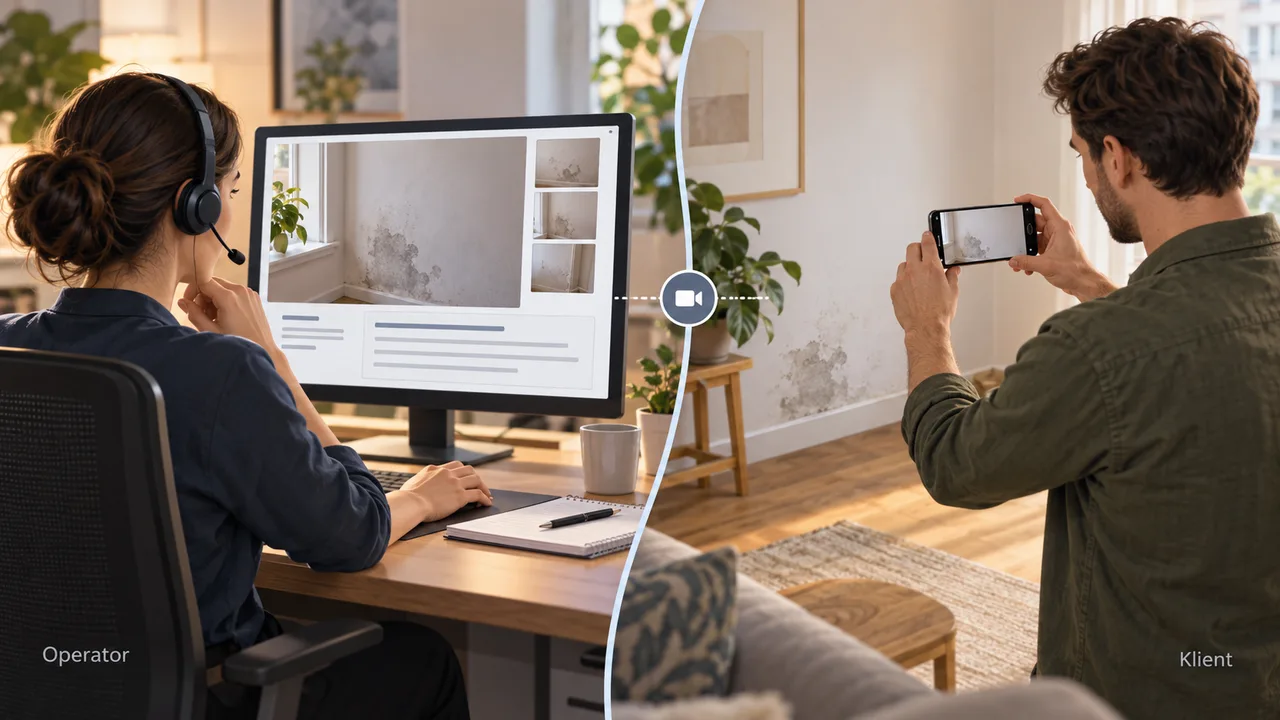
What I wanted to find out
Could I agree on a goal and rules with AI, then let it work without constantly approving small details? That was the main question behind this experiment. Several agents — AI helpers with different jobs — were meant to build and check an app together.
The idea was simple: a worker sits at a computer while a client shows them a location through a phone camera. The client receives a link by SMS and joins without installing an app. Photos and notes should remain available after the call so they can be revisited.
For a start, I planned a trial on a computer, using fictional data and simulated SMS sending and camera connections. It was meant to test the basics of the idea. It was not yet a test of a finished service with a client.
Who did what
I split the work so that the AI building the app would not be the only one assessing its own result:
- Opus in Claude Code built the app and made fixes.
- Codex led the work and kept track of the next steps.
- Astra checked the result separately and looked for errors.
- BO was meant to assess the result according to my preferences. It received written rules — a set of instructions called a skill.
One chat ran the task. A second gave me progress updates from time to time. I wanted to follow the work without joining every discussion about how to do it.
BO was my digital checker in a limited role. It could accept the result of this trial, but could not publish the app or make purchases. We had previously checked how well its judgments matched mine using only two examples — too few to call it a digital copy of me.
What the trial produced
The maximum time was 48 hours. We finished the agreed scope after about 7 hours and 3 minutes. Preparation before the trial is not included in that time.
The test app included visit invitations, client consent, saved photos, notes, and history. Astra found errors that were sent back for fixes. The result was accepted with reservations: use on real phones, SMS sending, and data security still needed checking. Part of the assessment relied on records of earlier tests rather than repeating everything from the beginning.
I had to approve one extra action. That was exactly what I had wanted to avoid. The trial produced something useful, but did not fully meet the aim of working without my involvement. It also did not show 48 hours of independent work — that was the limit, not the duration of the experiment.
The later camera check and real SMS test happened separately. I do not count them as part of this trial's result. I also did not measure whether this AI team was cheaper or faster than a simpler way of working.
Lessons for the next trial
I take three things from this experiment:
- Set a clear goal and agree on the necessary permissions before starting. Otherwise, work may stop again while waiting for the owner's decision.
- Someone other than the builder should check the result. In this trial, a separate assessment found errors and led to fixes.
- Distinguish a test version from an app ready for a client. Here, the next step is to test real phones, the complete SMS invitation process, and who can see the photos and notes.
If you want to try something similar, choose one small task and decide how you will know it is done. Also record the moments when you need to help. Only then will you see how much work AI actually took over.